Nuclear astrophysics is the discipline that merges nuclear physics with astrophysics. Each star functions as a massive nuclear physics
laboratory, with its characteristics changing over time based on size, age, and other factors. Information from nuclear physics is essential
for these calculations, helping us understand how stars function and the mechanisms of chemical element production – from the Big Bang and
violent stellar phenomena, like supernova explosions and neutron star mergers, to more common processes, occurring during the lifetime
of a star.
The two most important nucleosynthetic mechanisms are the slow process (s-process) and the rapid process (r-process).
The s-process occurs mostly in low-mass Asymptotic Giant Branch Stars, while the r-process, which is crucial for the formation of the heaviest elements,
takes place in explosive stellar environments. Both processes are driven by neutron-capture reactions.
Neutron-capture reactions for s-process nucleosynthesis
More than half of the elements heavier than iron are produced through the s-process. Sequential neutron capture reactions compete with beta decays
through a complex reaction network, leading to the production of chemical elements up to Bi-209.
Members of NPL have played leading roles in
this field of research by studying numerous neutron capture reactions via the TOF technique at the n_TOF/CERN facility and through neutron activation
techniques at NEAR n_TOF/CERN, NCSR “Demokritos” and Karlsruhe Institute of Technology (KIT).
Proton- and α-particle capture reactions for p-process nucleosynthesis
Besides the two main nucleosynthetic processes – namely, the s-process and r-process – there are mechanisms that cannot
account for the formation of 35 proton-rich nuclei, known as p-nuclei. To address this, a third mechanism, the p-process, is proposed.
Although few in number, p-nuclei hold particular significance in nuclear astrophysics due to the inconsistency between predicted and observed
abundances.
In this discipline, the role of NPL members is prominent through numerous (α,γ) and (p,γ) reaction studies performed at NCSR
“Demokritos”, as well as at the RUBION Dynamitron Tandem Laboratory of the Ruhr-University in Bochum.
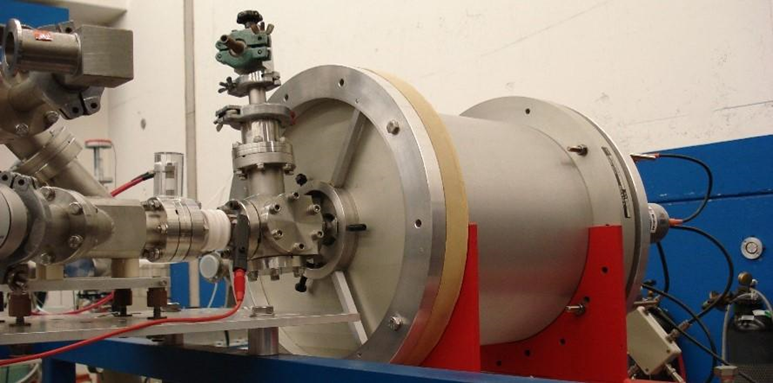
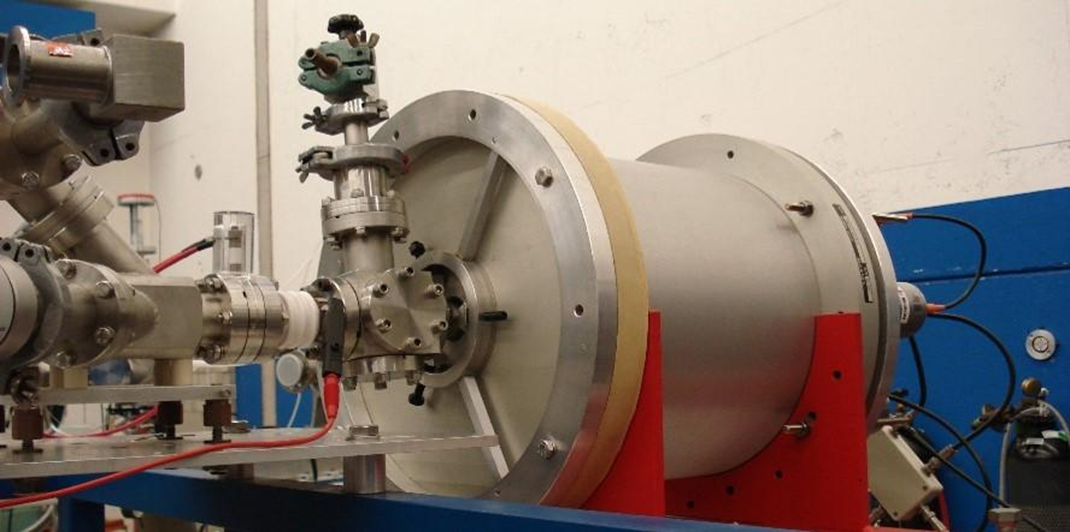
In the quest to understand how the universe was created and how it continues to evolve, the study of nuclear reactions is one of the first and most important steps.
Nuclear reactions are governed by various types of interactions and, due to the complexity of the “many-body problem”, this field remains largely
unexplored. Studying nuclear reactions helps scientists explore fundamental questions about the universe, including processes in stars, nucleosynthesis,
and the fundamental forces of nature. Beyond our curiosity to understand how the cosmos functions, nuclear reactions are crucial for numerous applications
that impact our daily lives, such as energy production, medical applications, nuclear safety and security, environmental monitoring, and industrial
applications.
Neutron-induced fission reaction studies for future fission reactor technologies
NPL members are engaged in the study of neutron-induced fission reactions, which are important for future reactor developments,
including fast neutron reactors, Generation IV reactors, and subcritical devices like Accelerator Driven Systems. Fission reaction studies are
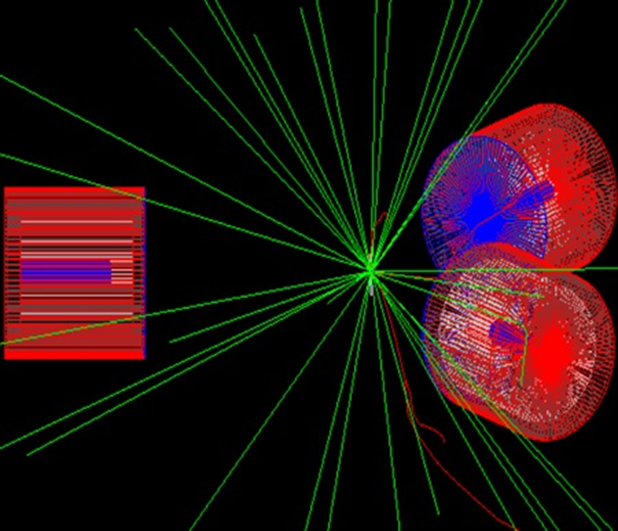
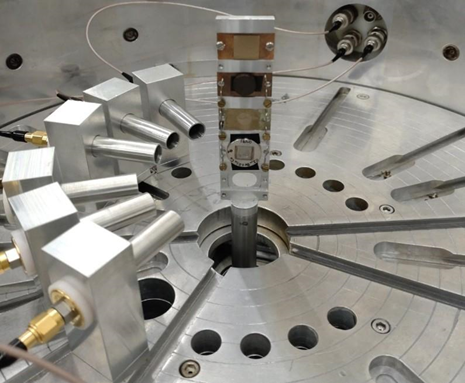
conducted at the n_TOF/CERN facility using MicroMegas detectors and more complex devices, such as PPAC detectors, STEFF, or FiFi, where
measurements of various observables (like mass distribution, energy, and velocity of fission fragments) are recorded.
(n,n´) and (n,xn) reaction studies
Recently, thanks to the successful efforts of several groups within the n_TOF collaboration at CERN, the study of neutron elastic scattering,
neutron inelastic scattering, and (n,xn) reactions has become feasible. NPL members have taken a leading role in this collaborative effort,
developing new detector setups primarily based on solid-state scintillators, such as stilbene-based detectors and LaBr3 scintillators, which
offer unique time responses and high energy resolution, as well as HPGe detectors, which can provide even better energy resolution for
in-beam gamma-ray spectroscopy.
(n,cp) reaction studies for fusion technology and medical applications
Another area of study involves neutron-induced reactions where one of the reaction products is a light charged particle. In recent years, this topic has
become one of the forefront research subjects in modern nuclear physics. These reaction studies are of particular importance for fusion reactor technology,
as they influence gas production in future fusion reactor structural materials, as well as for dosimetry and medical applications.
Charged particle reactions for Ion Beam Analysis
NPL members are also deeply engaged in the study of nuclear reactions and elastic scattering of interest in the field of Ion Beam Analysis (IBA).
IBA comprises a group of analytical techniques which are based on the detection of charged particles or photons emitted upon bombardment of a specimen with high energy ions.
The study of materials using ion beams plays a crucial role in various fields, including fusion reactor technology, biology, geology, archaeology, and numerous technological
applications. These studies are currently performed by NPL members at the Tandem Dynamitron Laboratory of the Ruhr University Bochum and at the Tandem Accelerator Laboratory
of the NCSR “Demokritos”.
Nuclear reactions with weakly bound nuclei: radioactive and stable beams
Weakly bound nuclei have a particular cluster structure with a weak binding energy between a core of the nucleus and a few valence nucleons.
These nucleons may constitute another nucleus weakly bound to the core (
6Li=
4He+
2H), they may sit
as a skin to the core (
8Li=
6Li+2n)
or they can form an halo around it (
8B=
7Be+p). The latter case is the most exotic one, with the halo nucleons
outside the potential well tunneling out into the "classically-forbidden" region. Binding energies of weakly bound nuclei are of the order
of keV to few MeV (136 keV to 3 MeV) to be compared with binding energies of 8/A MeV for well-bound nuclei. Reactions with such beams are of particular
interest for probing the structure of these nuclei and the effective interaction, opening new frontiers in Nuclear Physics and our
understanding of the cosmos.
An international program devoted to studies with light weakly-bound beams is performed by our group
in Ioannina (leader Emerita Professor Athena Pakou) with the collaboration of researchers from other Greek laboratories
(National and Kapodistrian University of Athens) and laboratories
from Italy, Spain and USA. Experiments for elastic scattering, breakup, transfer and fusion of light weakly-bound beams and light
to heavy targets are performed at the two National Laboratories of Italy (
INFN-LNL and
INFN-LNS) and at the
radioactive beam facility of Notre Dame University (USA) at near and below barrier energies.
Multinucleon transfer reactions for the production
of neutron and proton rich drip line nuclei
The detailed study of exotic nuclei reveals important nuclear structure information beyond the standard models,
as well as towards the effective nucleon interaction. The latter is fundamental for the accurate description of the nuclear equation
of state of N/Z asymmetric nuclear matter, which governs the physics of supernovae and neutron stars.
In continuation of our program with light weakly-bound beams, our group collaborates with Prof. George Souliotis's group of the
Chemistry Department at the National and Kapodistrian University of Athens (NKUA). Prof. Souliotis leads a project of peripheral heavy-Ion
collisions below the Fermi Energy. In these reactions, medium-mass nuclei very rich in neutron or/and proton are produced, via processes
involving proton removal, neutron pickup or a combination of both, up to a triple charge exchange process, all trivially observed in our data.
The reaction mechanisms of these processes, responsible for the production of neutron and proton rich nuclei, are also under exploration
in our studies. The experiments are performed either with the
MARS spectrometer of the Cyclotron Institute at Texas A&M University (USA)
or at the
MAGNEX facility at the National Nuclear Physics Laboratory of Catania, Italy.
Double Charge Exchange (DCE) reactions induced by heavy elements for the determination of
weak interaction matrix elements (NUMEN project)
The group of Emerita Professor Athena Pakou collaborates via a
Memorandum
of Understanding in the
NUMEN Project, exploring key aspects of neutrinoless double beta
decay (0νββ-decay) by heavy ion collisions. The main idea of this project is the fact that the processes underlying 0νββ-decay are comparable
with those governing DCE reactions, easier-to-observe in particular controllable environments: collisions between heavy, fast-moving ions.
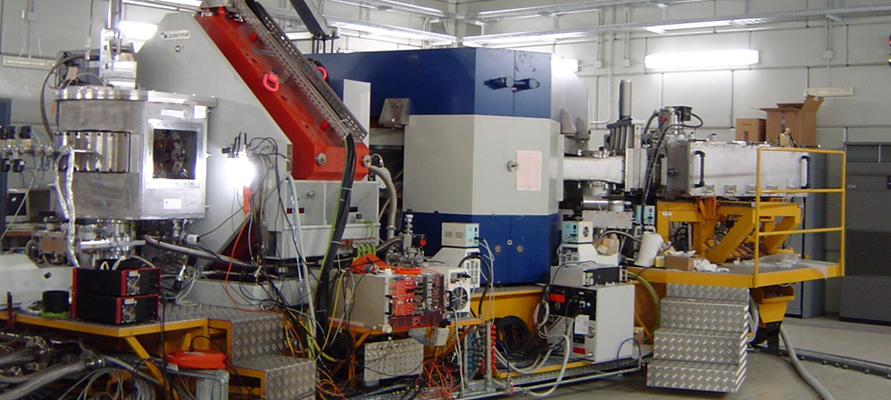
This idea ensured a generous European Funding for the upgrade of both the accelerator at the National Nuclear Physics Laboratory of Catania
(INFN-LNS) and the MAGNEX facility, named after the big magnetic spectrometer developed and functioning at INFN-LNS.
The NUMEN project is led by Professor Francesco Cappuzzello from the University of Catania and Dr Clementina Agodi from the National Institute
for Nuclear Physics (Italy) and represents the efforts of a global team of physicists, the MAGNEX group holding the central role.
Nuclear Spectroscopy outside the valley of stability
In order to improve our understanding of the evolution of nuclear structure outside the nuclear valley of stability, extensive efforts have been made
by the nuclear physics community over the last few decades. In this field, NPL members have contributed through their involvement in Coulomb excitation
studies, transfer reaction studies, and beta decay studies, mostly conducted at the
ISOLDE Radioactive Ion Beam Facility.
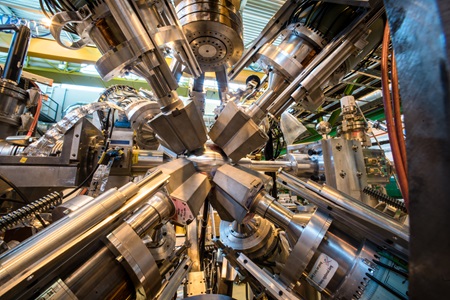
These studies exploit the capabilities of state-of-the-art spectroscopic equipment, such as the
MINIBALL and
T-REX setups.
Nuclear Physics Applications
In the area of nuclear physics applications, experimental work includes applications of Ion Beam Analysis techniques in materials' characterization,
studies of environmental radioactivity (both artificial and natural, with emphasis on radon
research), radiometric dating studies involving tritium and TL/OSL dating, and XRF spectrometry applications mainly relevant to materials'
characterization, environmental monitoring and cultural heritage studies.
Applications of IBA techniques in materials' characterization
As part of an extensive framework of collaborations with research groups across a diverse array of scientific disciplines - including geology, chemistry, archaeology,
quantum computing, and solid-state physics - and in partnership with distinguished institutions, such as Ruhr University Bochum (Germany), Bergbau-Museum Bochum
(Germany), Yale University (United States), CEA Saclay (France) and the University of Stuttgart (Germany), NPL members have consistently applied state-of-the-art
Ion Beam Analysis (IBA) techniques, such as Rutherford Backscattering Spectrometry (RBS), Nuclear Reaction Analysis (NRA), Particle-Induced Gamma-ray
Emission (PIGE), and Particle-Induced X-ray Emission (PIXE), to characterize a wide range of sample materials, thereby advancing scientific knowledge and
promoting interdisciplinary research to tackle complex scientific and technological challenges.
Environmental radioactivity
Studies of man-made and natural radioactivity in the environment have multiple goals. Apart from providing data to estimate the human exposure
and to assess the compliance with radiation protection standards, research in the field aims to investigate the behavior and transport of
radionuclides in different ecosystem components, to develop countermeasures for mitigating radioactive contamination and to plan remediation
strategies. From another perspective, radionuclides are also exploited as tracers to enhance our understanding of environmental processes,
such as the circulation patterns of water in hydrology and oceanography, the transport of soil and sediment, the transfer and accumulation
of contaminants along the food chain, the dynamics of aerosol particle deposition and the dispersion of pollutants in the atmosphere.
Artificial radioactivity studies
NPL has been active in this area ever since the Chernobyl accident, focusing on studies of distribution and migration of artificial
radionuclides (mainly 137Cs and 90Sr) in soils, sediments and aquatic environments, their soil-to-plant transfer, and the effectiveness of natural
and synthetic materials as radionuclide scavengers. Much experience has also been gained from participation in European network projects
set up for contingency planning and designing rehabilitation strategies following a nuclear or radiological emergency.
It should be noted that NPL is a member of the Laboratories Network collaborating with the Greek Atomic Energy Committee (GAEC) in the event of a
nuclear or radiological incident, with the task to perform radioactivity measurements in the regions of Epirus and Western Macedonia,
according to the GAEC emergency preparedness plans.
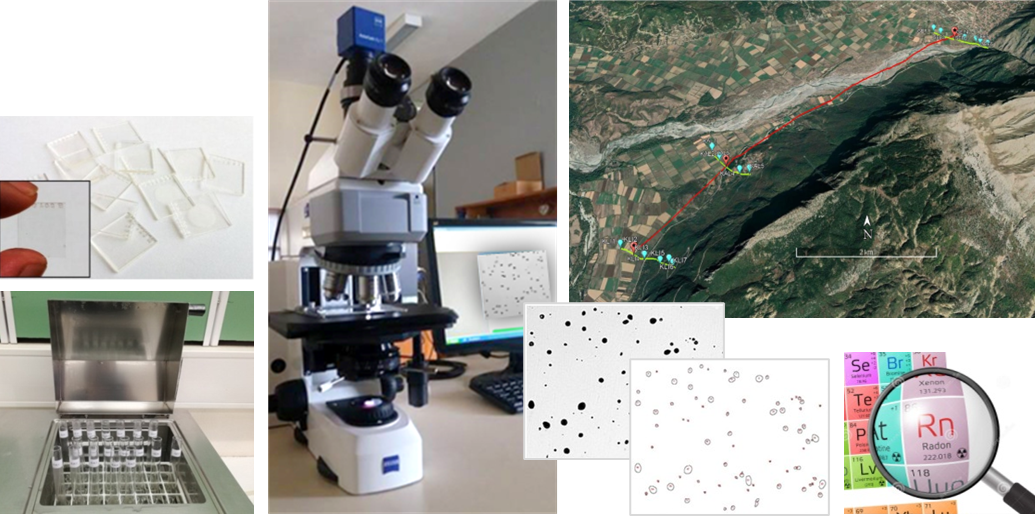
Radon studies
Radon – a radioactive, noble gas that belongs to the 238U series –
accounts for half of the average dose received by the general population from exposure to natural radioactivity and is the second leading
cause of lung cancer following smoking. Although outdoor radon levels are not considered a health risk, elevated indoor concentrations may occur,
as a result of underlying geology features, atmospheric conditions and building practices. Monitoring the exposure to indoor radon, both in dwellings
and in workplaces, and designing effective prevention and mitigation strategies thus attract intense research worldwide.
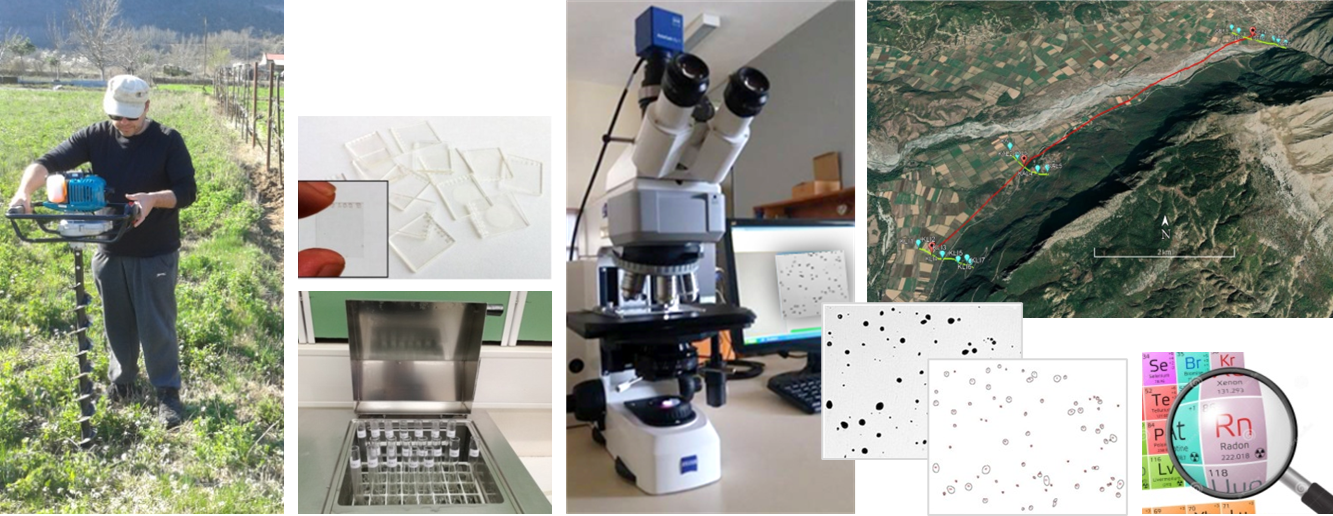
At the same time, radon has proved to be a particularly powerful tracer for the temporal and spatial variation of environmental phenomena and finds a wide range
of geophysical applications. Its study as an earthquake or volcanic activity precursor, as a tool for geological faults mapping, for investigating water
exchange in reservoirs or groundwater interaction and discharge, are but a few examples of radon applications.
NPL has been engaged in monitoring indoor radon levels and estimating effective doses for residential and occupational exposure.
Systematic studies on the temporal variability of soil gas radon are also being performed, probing the effect of atmospheric parameters on radon fluctuations
and identifying radon anomalies possibly associated with seismic activity.
Radiometric dating
Radiometric dating encompasses a set of techniques used to determine the age of objects or materials by measuring the abundance of certain
radioactive isotopes and their decay products, used as natural clocks to estimate the time elapsed since a sample was last altered in a
significant way.
TL/OSL dating
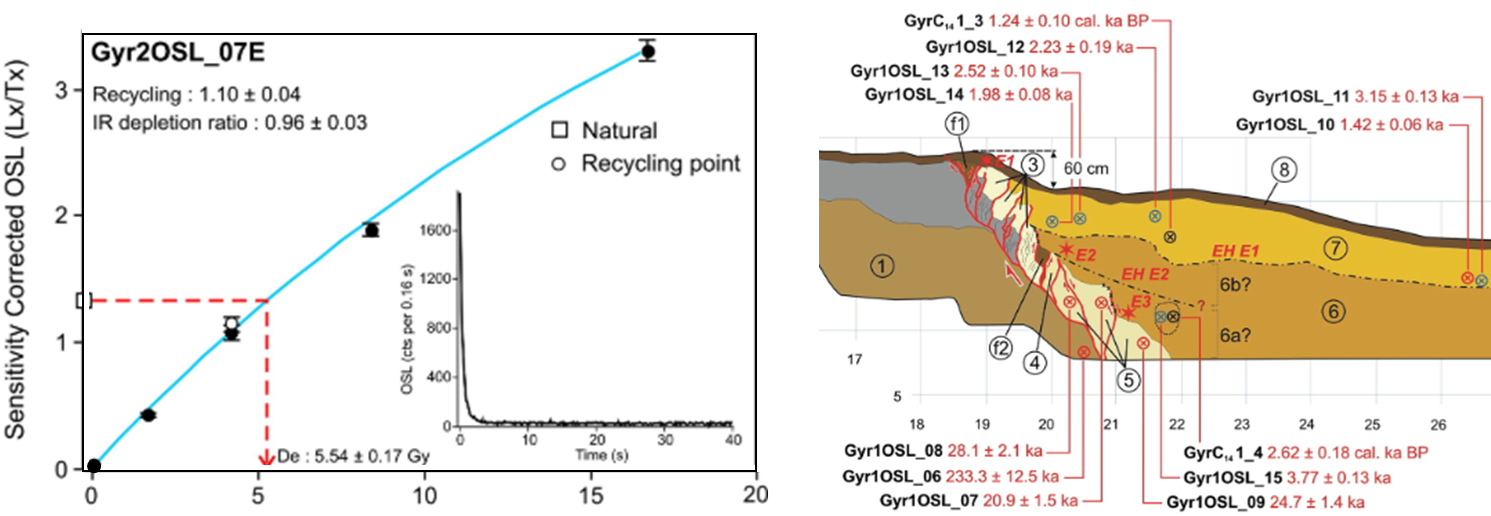
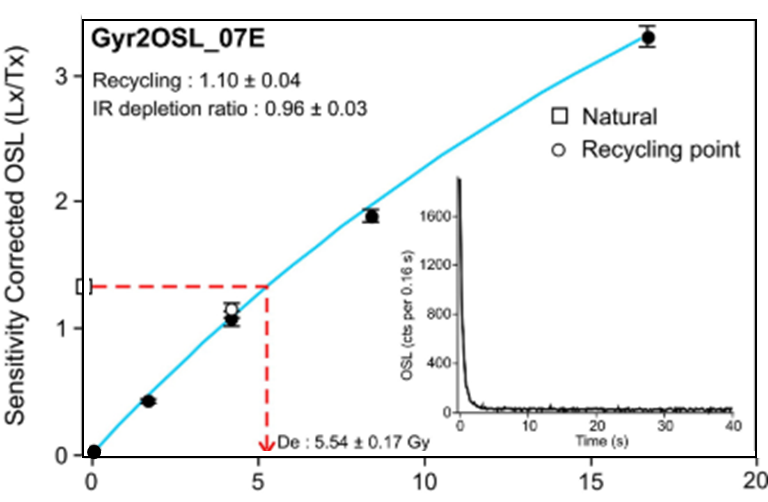
Thermoluminescence (TL) and Optically Stimulated Luminescence (OSL) dating are versatile techniques successfully applied across many
disciplines and especially in the field of archaeology, geology, and environmental science. They are based on the phenomenon that certain
nonconducting solids (such as minerals and rocks - e.g. quartz and feldspar), which were previously exposed to ionizing radiation, will
emit light - luminescence - once thermally or optically stimulated. The intensity of the luminescence signal is depended on the radiation
absorbed by the sample during burial, on the environmental dose rate, and the time elapsed since its last exposure to heat or light.
Typically, the time-window achieved extends from a few hundred to a million of years.
TL and OSL dating are commonly used to date sediments in archaeological sites, tracking the origin and movement of source materials
and providing a timeline of human activity. When applied to river terraces, beach deposits and other sediments, they provide age
estimates for geological formations and landforms. TL dating finds further application in dating quartz or feldspar grains in ceramics, in stone
tools and in stones used to construct ancient buildings and monuments.
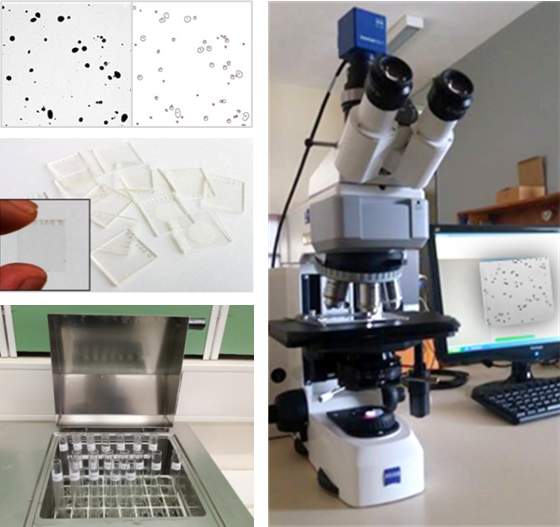
A TL/OSL dating Laboratory is in operation by NPL members, as part of the
University of Ioannina Archaeometry Center.
TL measurements are performed in flint-silex and ancient pottery samples, while OSL analysis is carried out for dating ancient
pottery sherds, other unearthed artefacts and architectural remains like walls or ancient constructions and for assessing
the chronological context of archaeological sites through dating sediments from various archaeological layers.
The OSL method is also widely applied in samples of geological interest
for dating earthquake-related deposits and assessing the timing of paleoearthquakes.
Tritium dating
Tritium (
3H) – a radioactive isotope of hydrogen with a half-life of 12.4 years – is naturally produced in the upper atmosphere from the
interaction of cosmic rays with nitrogen and oxygen atoms and enters the water cycle through precipitation. In addition, tritium has been
released into the environment through nuclear tests (prior to the Comprehensive Nuclear-Test-Ban Treaty in 1996). Its short half-life and steady
state concentration makes it useful for dating relatively recent materials, particularly water or other hydrogen-containing materials,
with a timeframe from a month to over 150-200 years. In this context, tritium dating finds applications in Environmental Sciences,
Hydrogeology, Geology, Climatology and other disciplines.
A Tritium Laboratory is in operation by NPL members, as part of the
University of Ioannina Archaeometry Center. Tritium measurements
are performed with a Liquid Scintillation Analyzer (LSA) capable of measuring in super low count mode and thus adequate for the analysis
of the inherently low tritium levels found in natural waters (5 to 15 Tritium Units, TUs, 1 TU=0.12 Bq/L). The Laboratory is equipped with
a specially designed electrolysis line which can electrolyze up to 1 L of water thus reducing the lower limit of detection down to 1 TU.
Studies are performed for rainwater, groundwater and tap water samples, providing valuable data for hydrological investigations on water
resources such as lakes, rivers and underground water aquifers.
XRF spectrometry applications
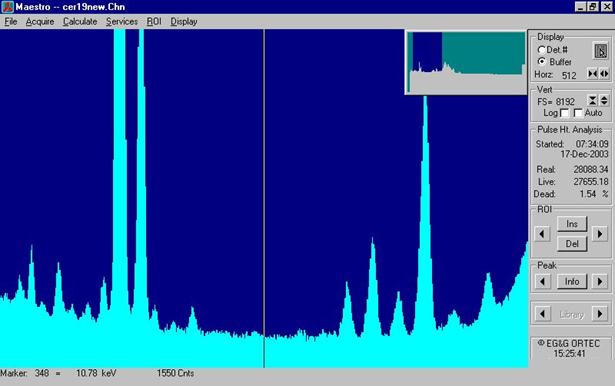
X-Ray Fluorescence (XRF) spectrometry is a powerful technique for the qualitative and quantitative elemental analysis of a variety of solid and liquid samples.
Compared to other competitive techniques, it has the advantage of being non-destructive, multi-elemental, fast and cost-effective. Furthermore,
it offers a fairly uniform detection limit across a large portion of the Periodic Table and is applicable to a wide range of concentrations from 100%
to a few ppm.
Materials' characterization
The XRF Spectrometry Unit at NPL operates in the frame of the
Network of Research Supporting Laboratories of the UoI,
providing analytical services to research groups from different disciplines. Most commonly analyzed samples include synthetic organometallic
compounds, metal oxides, metals and alloys.
Cultural heritage studies
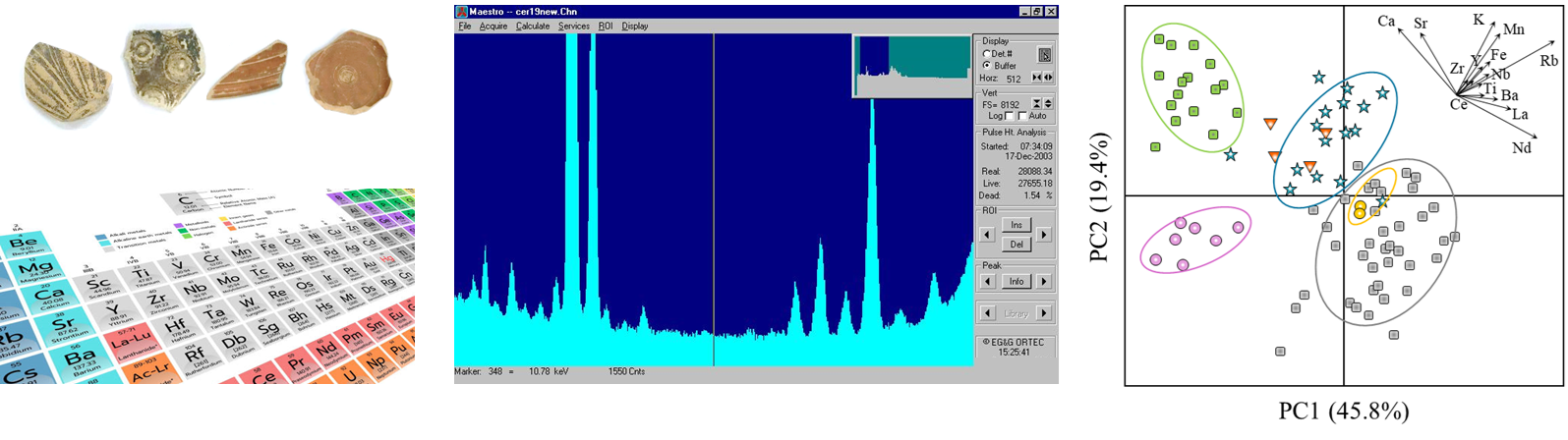
Among its diverse applications, XRF spectrometry is a typical method used for the characterization of cultural heritage artifacts.
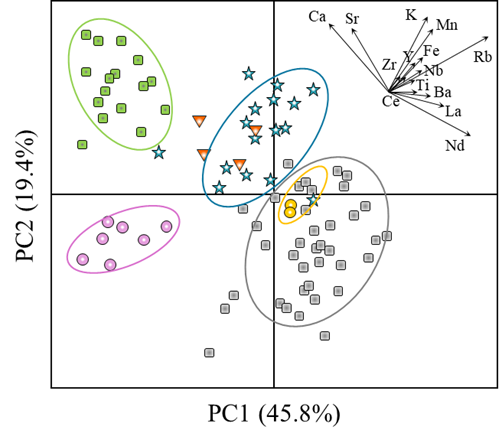
The XRF Unit at NPL performs research in the field of archaeometry, focusing mainly on studies of ancient ceramics. Compositional
data combined with multivariate statistical analysis are explored to extract provenance information and rediscover manufacture technology
and use of the analyzed specimen, aiming to develop a databank and establish reference groups for ancient pottery in the region of Epirus.
Environmental monitoring
The XRF technique, being multi-elemental, with adequate detection limits and minimum requirements for sample preparation, is a method
of choice for the determination of heavy and toxic elements in samples of environmental interest. XRF spectrometry studies are carried
out at NPL to quantify trace elements and heavy metal concentrations in samples, such as soils and sediments, natural water, plant and
animal tissues. The analyses aim to assess the degree and the potential sources of contamination and to evaluate environmental risks
according to established quality guidelines.