In-house facilities
Charged-particle and gamma-ray detection systems
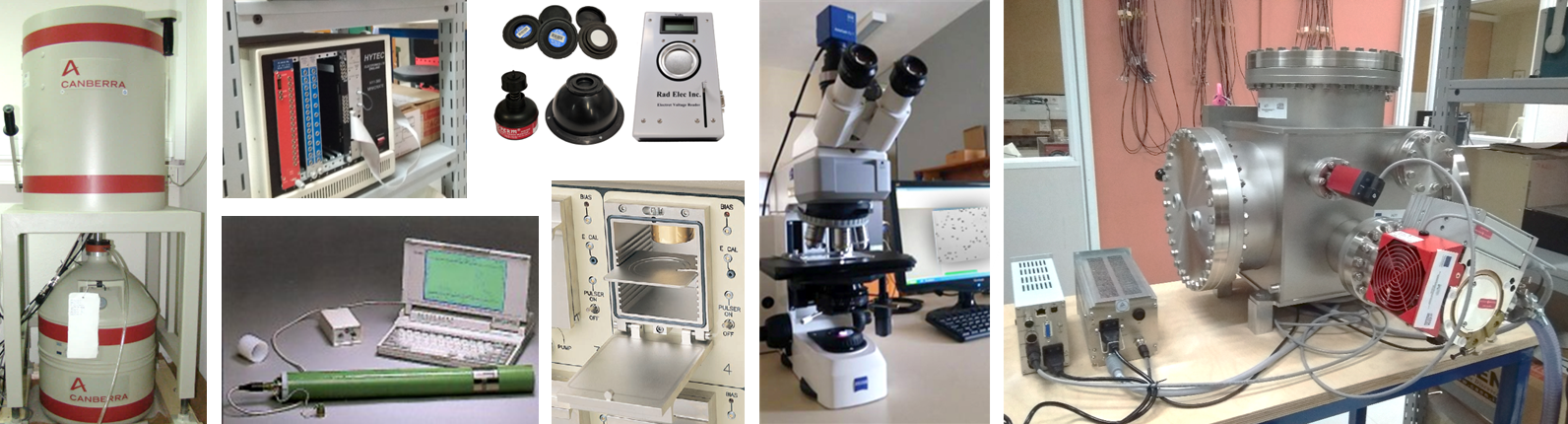
NPL facilities are equipped with a variety of radiation detection systems, including:
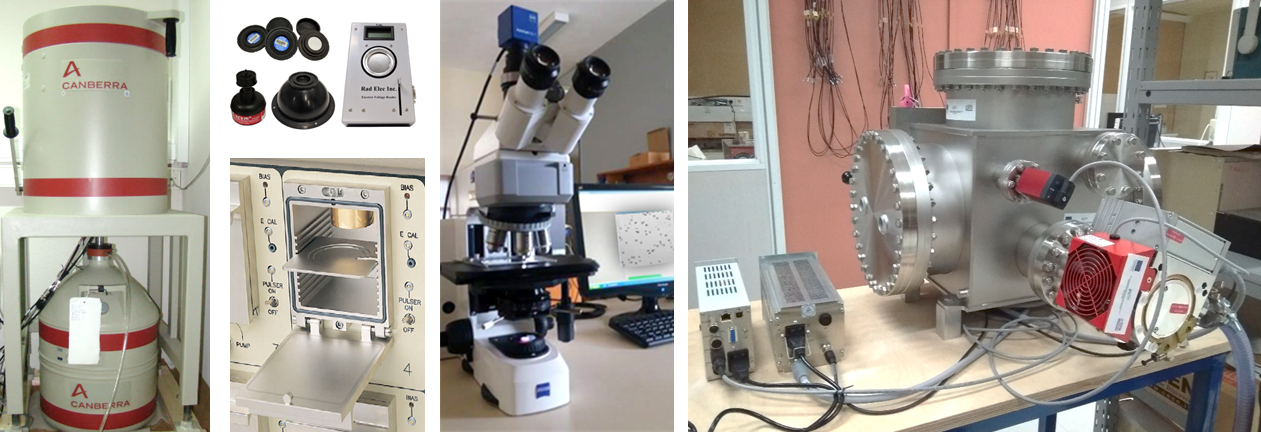
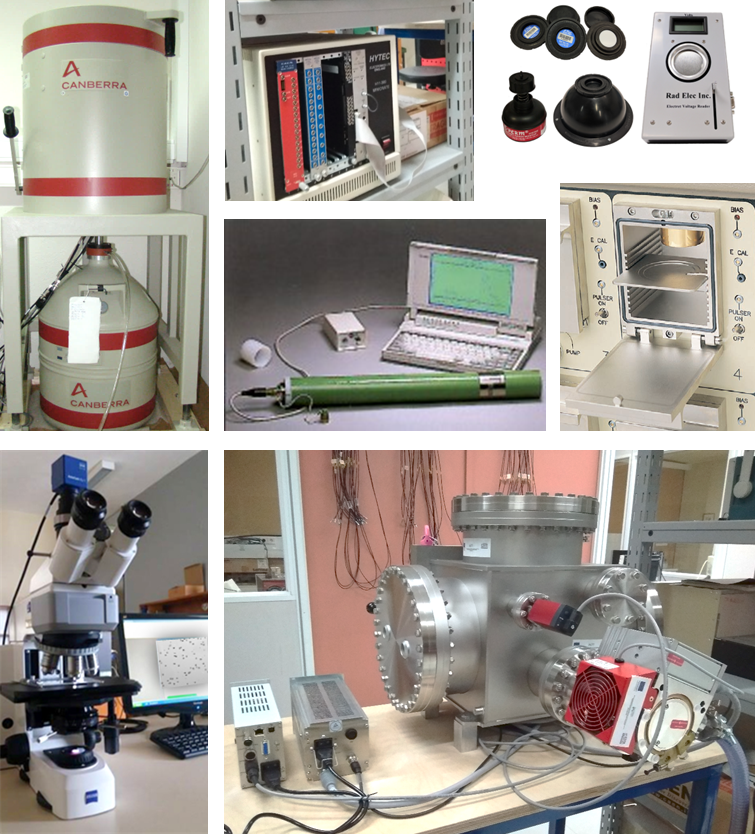
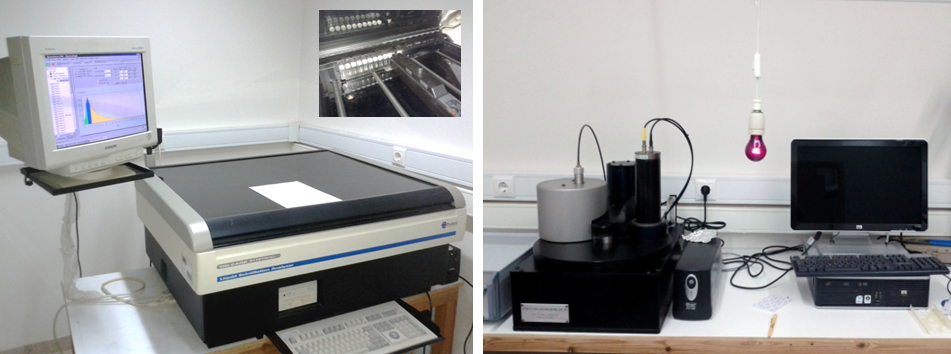
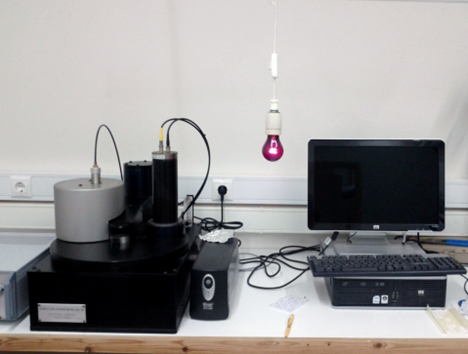
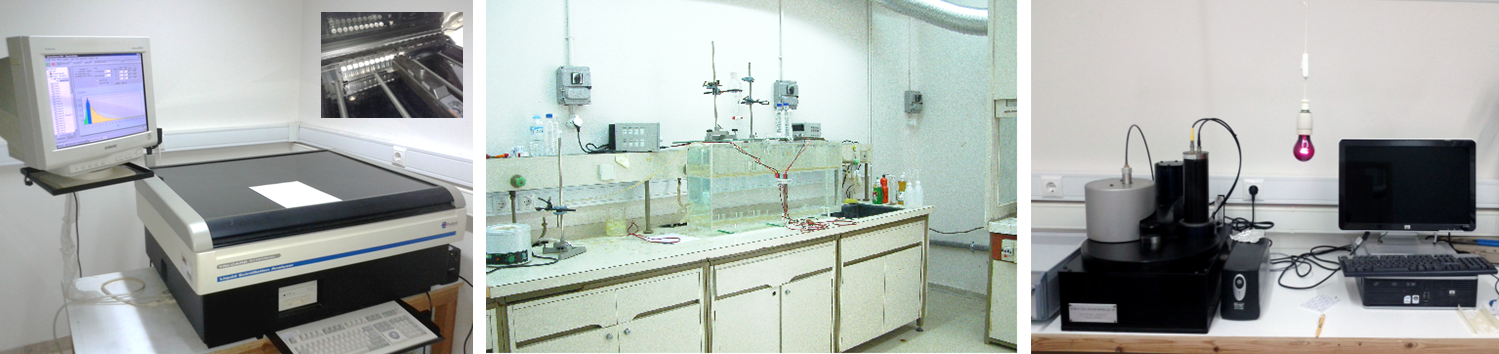
an alpha-spectrometer (Canberra Model 7401VR) accommodating a planar silicon (PIPS) detector
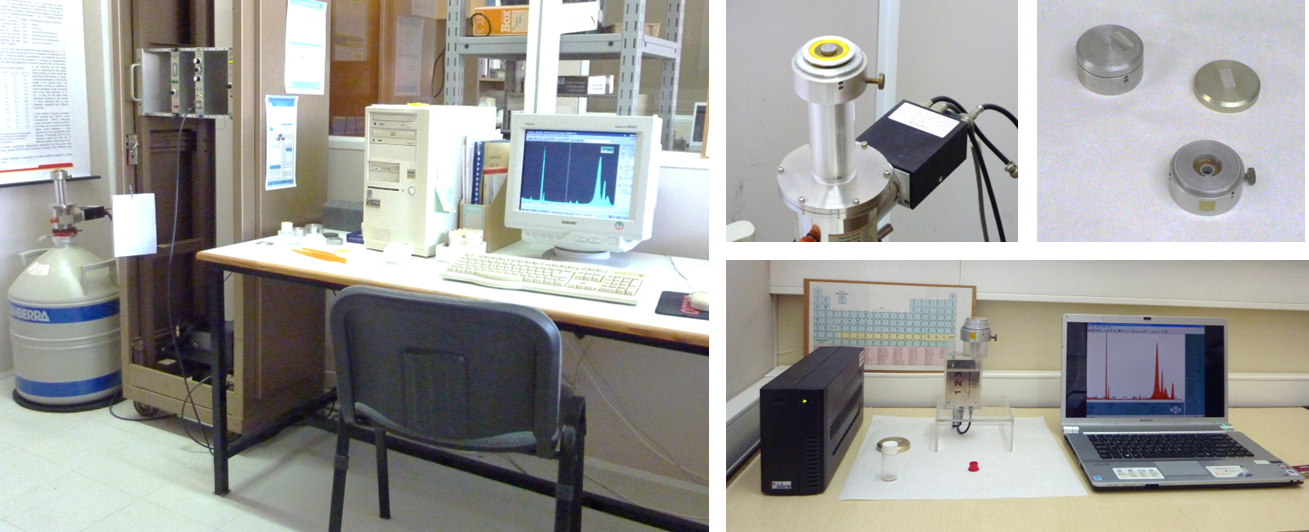
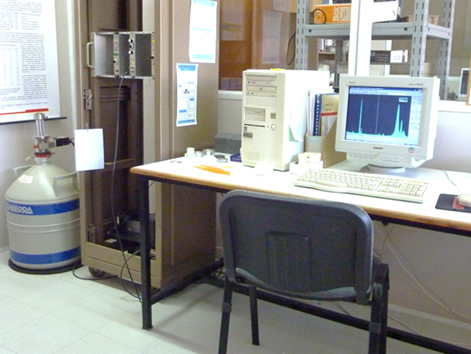
a gamma spectroscopy system based on a HPGe
broad energy detector (Canberra) capable of detecting 3 to 3000 keV photopeaks, with a relative efficiency >26%
several Si charged-particle detectors
various scintillation detectors
solid state nuclear track detectors (CR39 and LR115) which are analyzed under a dedicated optical
microscope (Axio Scope.A1, Carl Zeiss GmbH) connected to a PC by means of a digital camera
a Barasol MC2 probe (ALGADE) based on an implanted silicon junction for continuous soil radon monitoring
a number of portable radon detectors (SARAD GmbH), used for measuring air radon, along with pressure,
temperature, air moisture and CO2 levels
a Continuous Air Monitoring Passivated Implanted Planar Silicon (CAM-PIPS, Canberra) detector,
adequate for radon studies in the laboratory
a number of independent Data Acquisition Systems coupled with the necessary NIM pulse shaping modules
an ultra-high (oil free) vacuum chamber, allowing for the testing of state-of-the-art, multi-strip detection systems.
Radioactive sources
A wide collection of open and closed radioactive sources are available for detector testing and calibration.
Chemical & Electronics laboratory
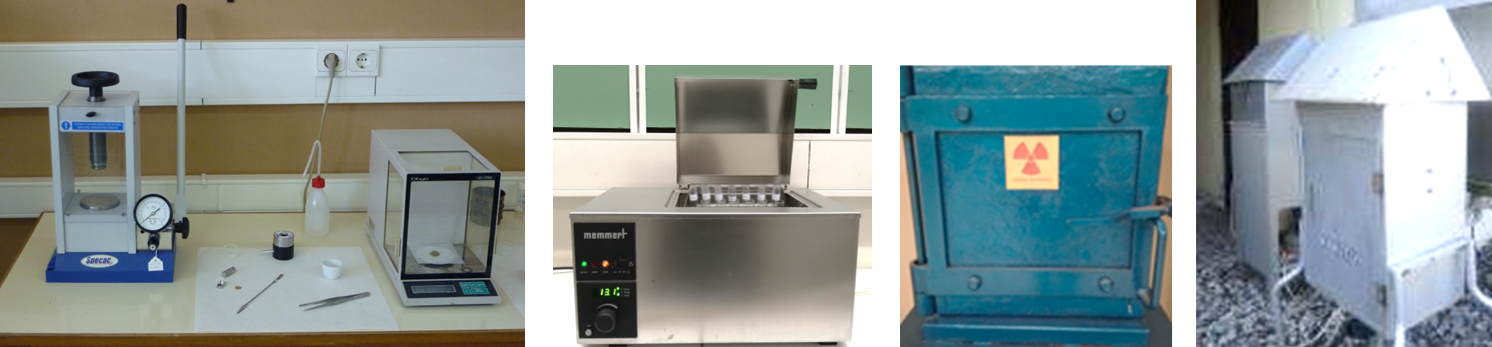
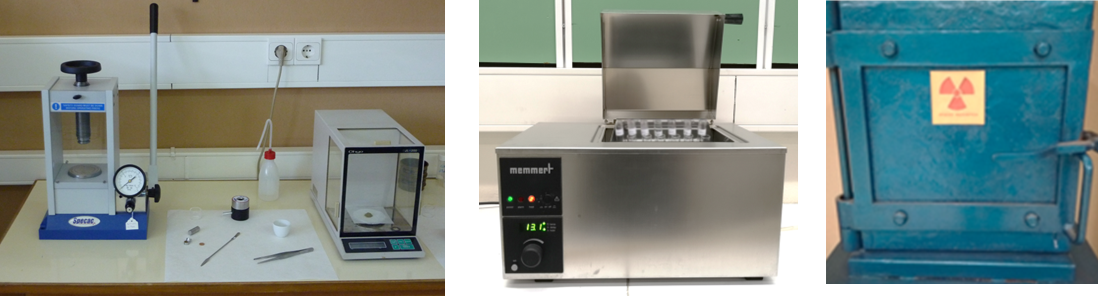
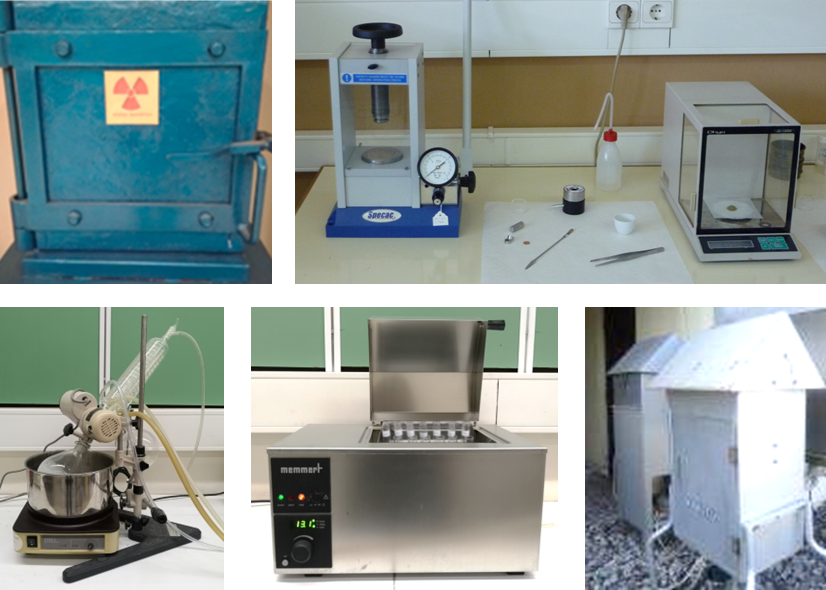
Standard chemical laboratory equipment is in place for sample preparation (including grinders, mortars, sieves, conventional and high-precision
balances, ordinary and high-temperature heaters, a hot bath, a pellet press, an air pump etc).
An electronics lab is installed for the development and optimisation of NPL detection systems.
Equipment at the Archaeometry Center
The
Archaeometry Center at NPL operates in the frame of the
Network of Research Supporting Laboratories of the UoI, providing analytical services to research groups from different disciplines.
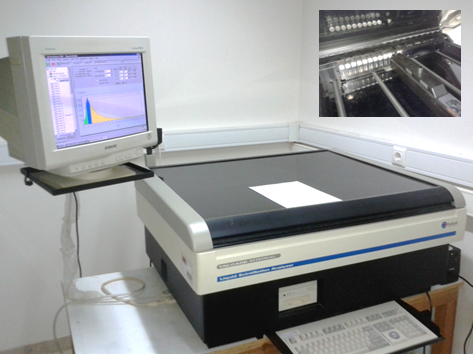
A super low-level background liquid scintillation analyzer (Tri-Carb 3170TR/SL - PerkinElmer Inc) is installed at the Archaeometry Center,
capable of measuring tritium concentrations for radiation protection applications and groundwater
studies. A lower limit of detection down to 1 TU is achieved through a specially designed electrolysis line (typical tritium levels in natural waters range from 5 to 15 Tritium Units, TUs, 1 TU=0.12 Bq/L).
A Thermoluminescence (TL) and Optically Stimulated Luminescence (OSL) reader (model Risø TL/OSL DA-20) is also in operation for
dating archaeological artifacts (mainly ceramics and flint stone tools) and geological samples.
Equipment at the XRF spectrometry Unit
A home-built Energy-Dispersive X-Ray Fluorescence (EDXRF) spectrometry arrangement is operating at NPL. Annular radioisotopic sources
(
109Cd and
241Am) are used for sample excitation, while detection of fluorescent X-rays is performed by a Si(Li) detector (Canberra SL80175),
coupled with electronic units for signal processing and data acquisition.
The XRF Spectrometry Unit at NPL operates in the frame of the
Network of Research Supporting Laboratories of the UoI,
providing analytical services to research groups from different disciplines. Most commonly analyzed samples include synthetic organometallic
compounds, metal oxides, metals and alloys, soils and sediments, plant and animal tissues, archaeological ceramics and glass artifacts.
Collaborating facilities
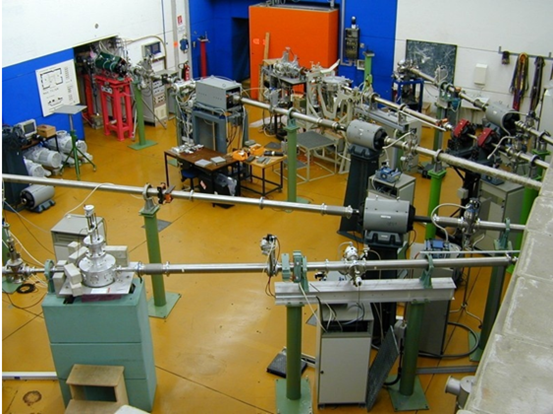
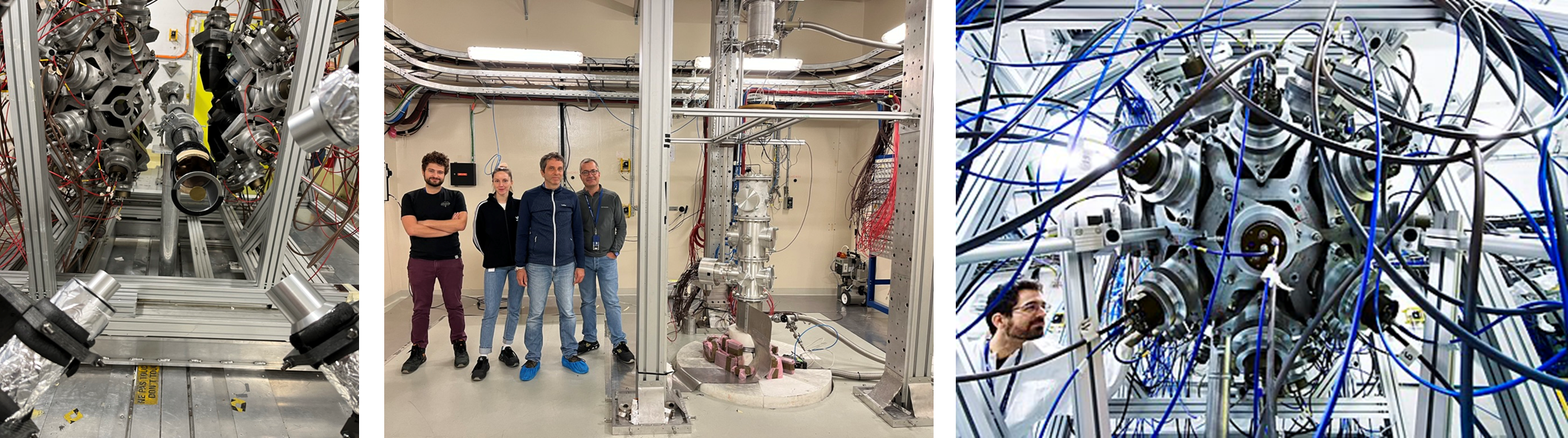
TANDEM T11 5.5 MV accelerator at NCSR "Demokritos"
Members of NPL have strong collaborations with the groups of Dr. Anastasios Lagoyannis and Dr. Michael Axiotis from the
Institute of Nuclear and Particle Physics, NCSR "Demokritos" in three research areas:
the study of charged particle reactions for Ion Beam Analysis (IBA), neutron-induced reactions for various energy and non-energy applications,
and nuclear astrophysics studies, primarily focused on p-process nucleosynthesis.
n_TOF facility at CERN
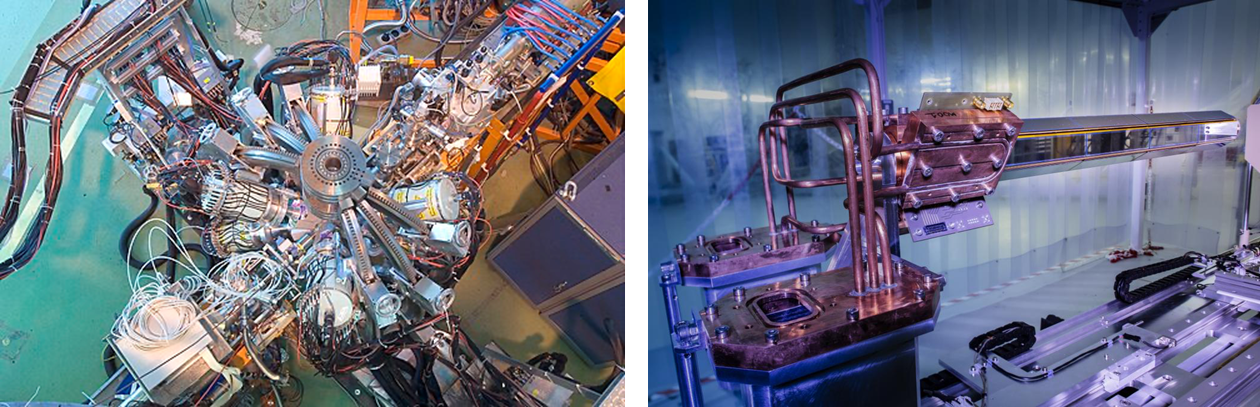
Members of NPL hold leading roles within the
n_TOF collaboration, engaging in numerous on-going and successfully completed projects.
These projects focus on studies of neutron-induced fission reactions, (n,cp) reaction studies for nuclear astrophysics, nuclear medicine,
fusion technology, and neutron capture reaction studies of interest in nuclear astrophysics.
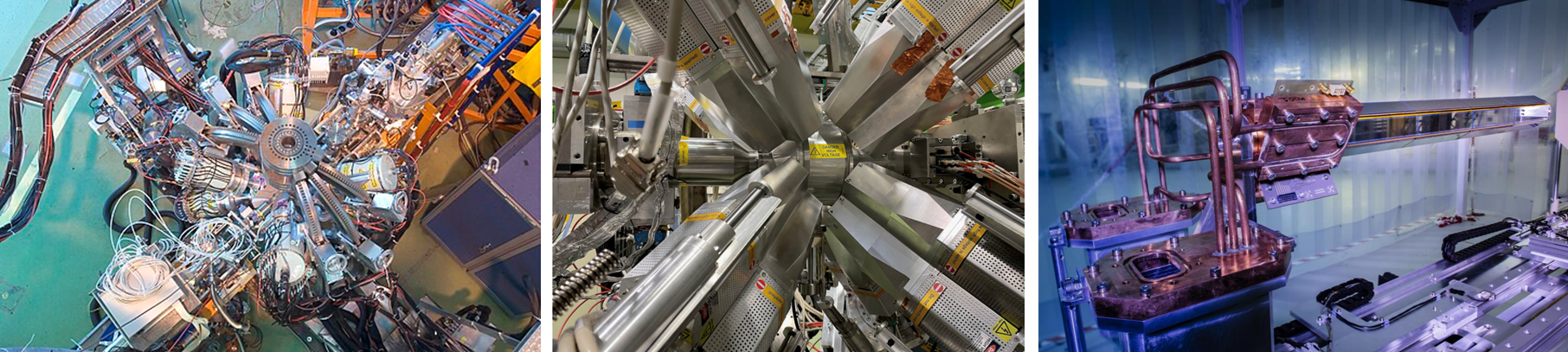
ISOLDE facility at CERN
At
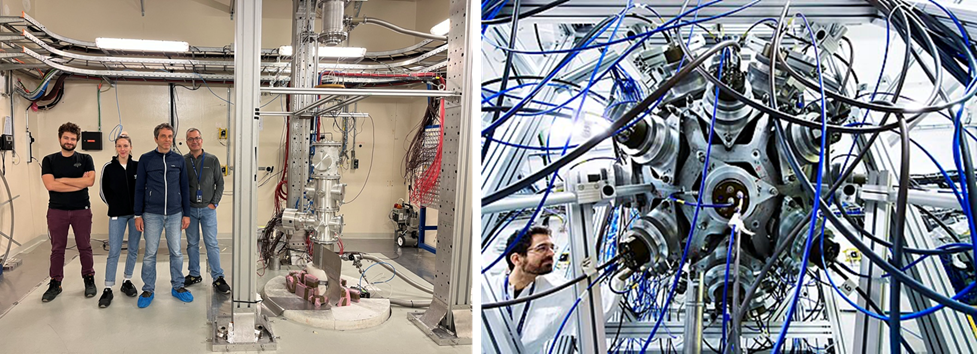
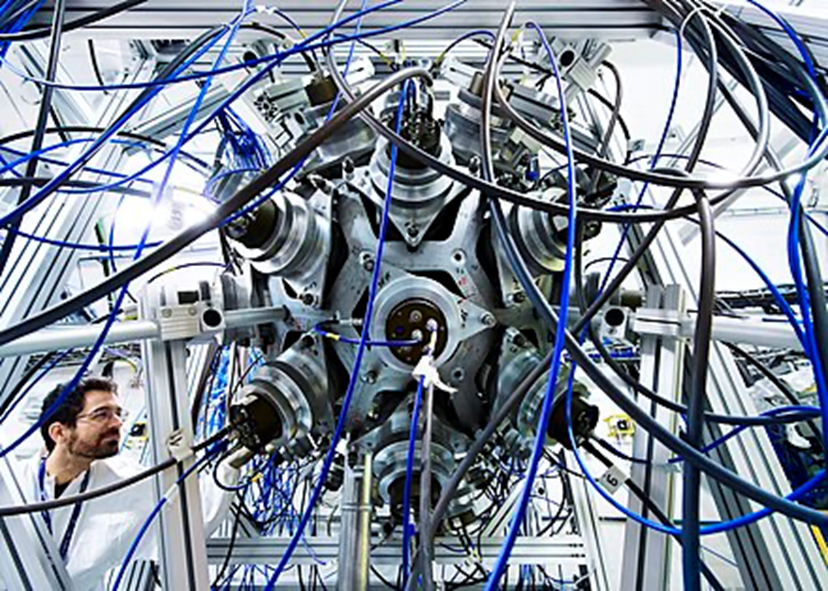
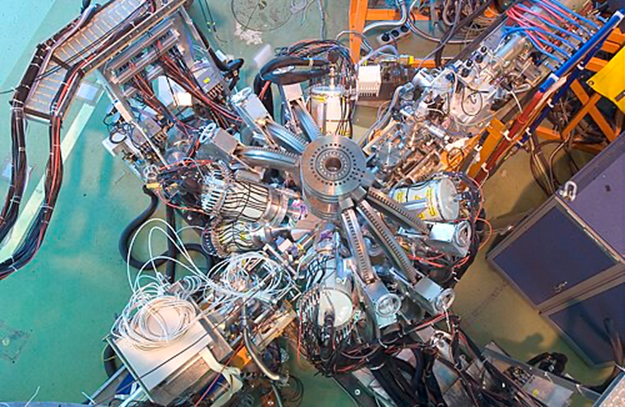
ISOLDE facility, NPL makes a significant contribution through nuclear spectroscopy studies, primarily conducted using Coulomb excitation and transfer reaction
studies at
MINIBALL,
T-REX,
and
ISIS.
Dynamitron Tandem Laboratory at Ruhr-University Bochum
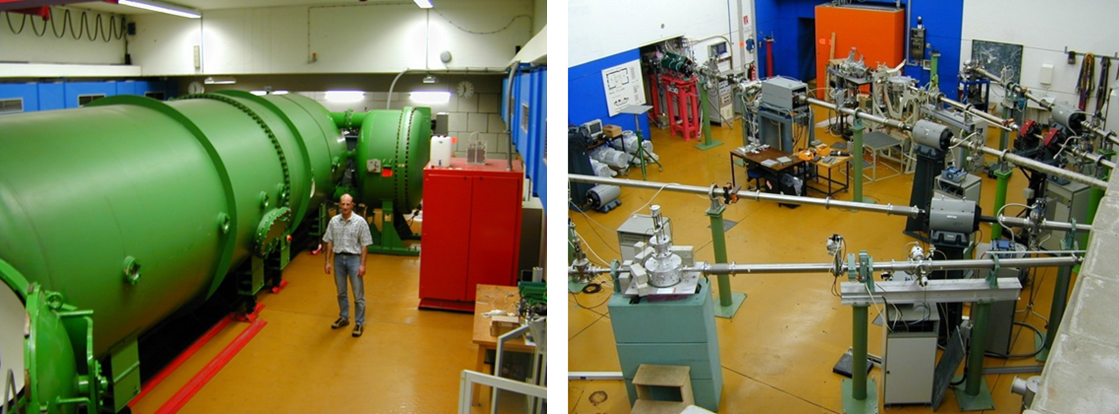
NPL members are actively involved in several ongoing and successfully completed projects at the Dynamitron Tandem Laboratory of the
Central Unit for Ion Beams and Radionuclides
of the
Ruhr-University Bochum. The projects focus on the study of proton and alpha capture reactions relevant to p-process
nucleosynthesis, alongside the study of charged particle reactions for Ion Beam Analysis (IBA).